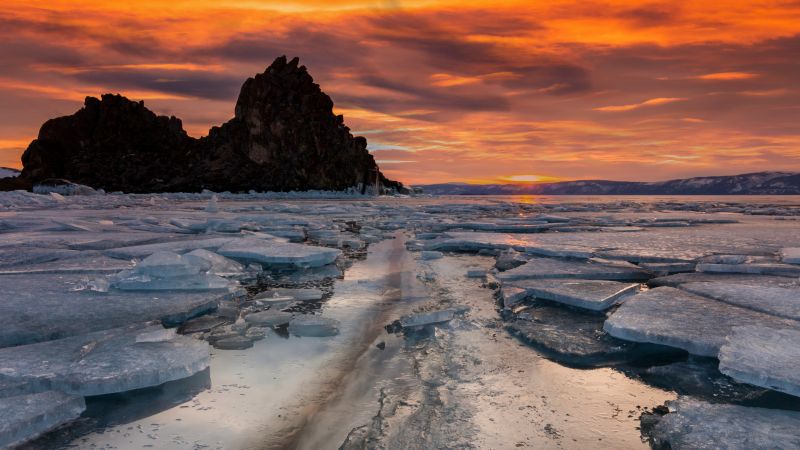
Where it all began
1 minute

Simon Wickes
Group Managing Director
The enzymes that power our extraction kits were not designed in a laboratory. They were discovered in one of the harshest environments on Earth: the volcanic slopes of Antarctica, where temperatures swing from near-freezing to boiling and where most biology simply cannot survive.
We were searching for extremophilic bacteria with unusual properties. The geysers, hot pools, and volcanic fields of New Zealand and Antarctica are rich in organisms that have evolved to thrive at temperatures between 0°C and 100°C. The enzymes they produce are stable, active, and structurally resilient under conditions that would destroy most biological molecules.
What we found was a bacterium that produces a proteinase with a specific and very useful property: it is largely inactive at room temperature, becomes highly active at 75°C (lysing cells and stripping DNA of proteins), and is completely destroyed at 95°C.
That temperature-dependent behaviour is the foundation of everything we do. You switch the enzyme on with heat. You switch it off with more heat. No harsh chemicals are required. No purification columns. No transfer steps.
The whole extraction happens in a single tube, driven by a temperature programme on the thermal cycler you already have in your laboratory.
Nature spent a long time optimising these enzymes. We are putting them to work.