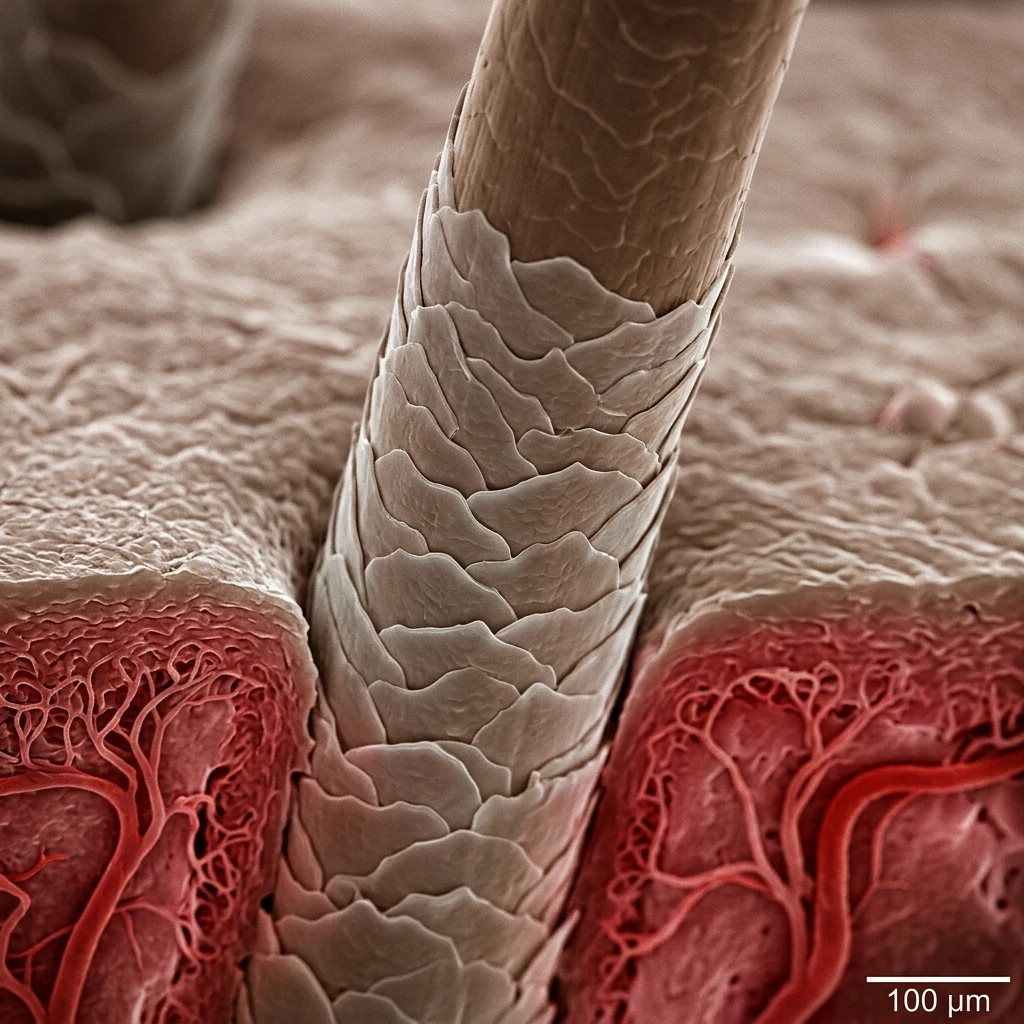
Hair as trace evidence: trichology alongside DNA
3 minutes + 10 minutes (paper)

An undergraduate research project at the University of Northern Colorado set out to answer a simple question: could a single hair, examined under a microscope and then extracted for DNA, correctly identify a suspect from a staged crime scene.
Eight human hair samples and one dog hair sample were collected and compared against a fictional suspect. Each hair was examined under a polarised microscope for its structural characteristics, then extracted using a forensicGEM DNA Extraction Kit and sent for mitochondrial DNA sequencing.
The combination worked. Microscopy narrowed the field by structural characteristics, and DNA sequencing confirmed identity. Neither method alone would have been as conclusive.
This was student research, not a clinical validation, and the scenario was staged rather than a real case. But it illustrates something true about hair as trace evidence: it is one of the most commonly recovered materials at a crime scene, and it still rewards combining old techniques with new ones rather than replacing one with the other.
Where else in forensic science does an old method still earn its place alongside DNA?