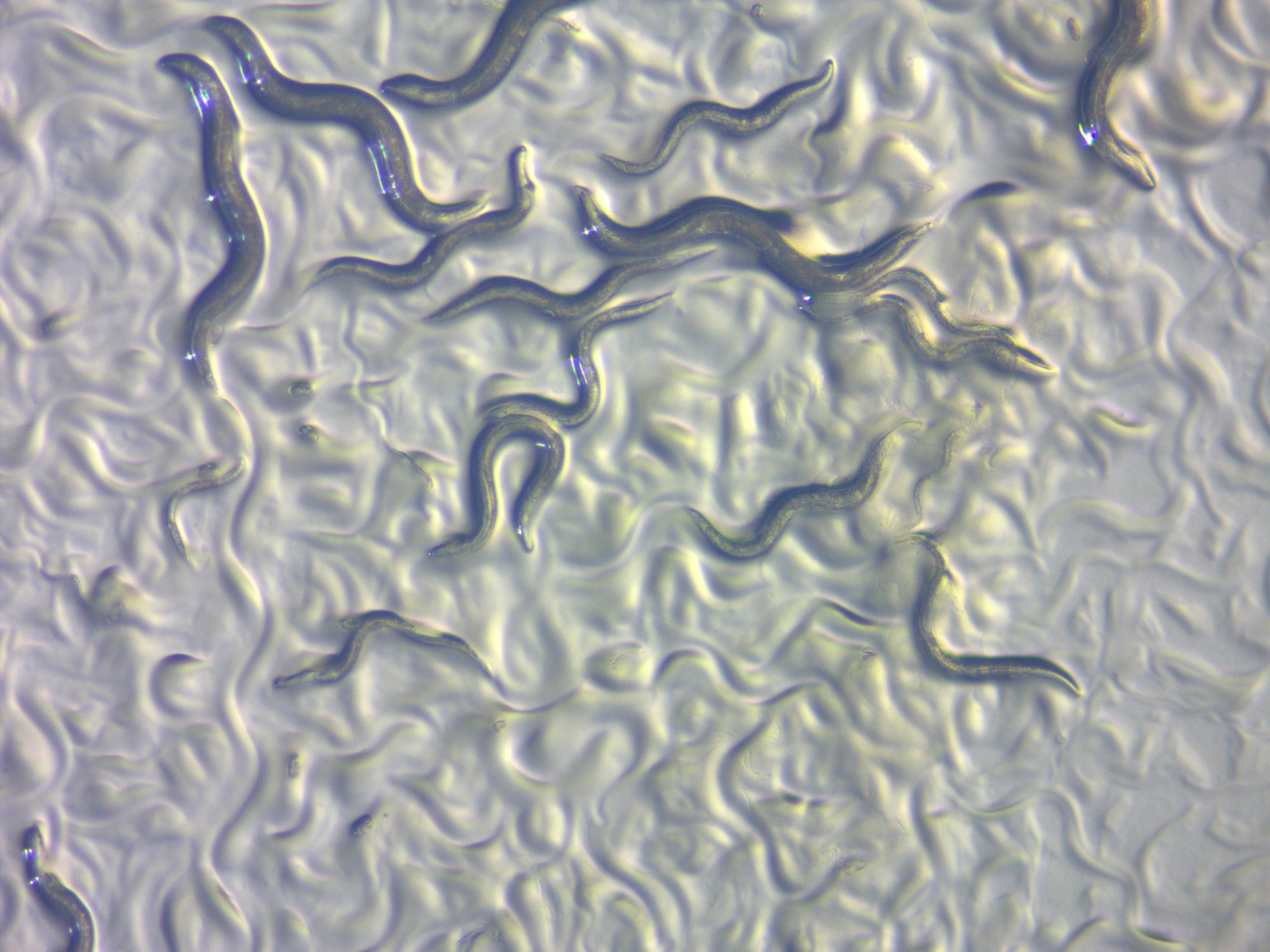
C. elegans genotype tracking. Experimental evolution without the wait
2 minutes + 10 minutes (paper)

Experimental evolution with Caenorhabditis elegans uses the nematode's short generation time to track how genotype distributions change across hundreds of generations over weeks, not years. The constraint is genotyping: identifying which alleles are present in which populations at which time points, across multiple replicate lineages.
The published work cited on the Exymes resources page uses our prepGEM chemistry for rapid DNA extraction from C. elegans populations for genotype tracking in experimental evolution studies. The single-tube, no-purification workflow is well suited to this application: small volumes of biological material, high throughput requirements, and the need for a method that can be run consistently across many time points without variability introduced by multi-step protocols.
C. elegans is a research organism used widely in developmental biology, neuroscience, ageing research, and evolutionary genetics. The ability to extract PCR-compatible DNA quickly and reproducibly from worm populations without bead beating, columns, or organic solvent extraction, is a practical advantage in any lab running population-level genetics studies.
The applications of the same chemistry extend directly to other small invertebrates, including the insect and aquatic organism work referenced in earlier posts.